Daikatana

| a game by | Ion Storm Inc. |
| Genre: | Action |
| Platforms: |
PC,
 Nintendo 64 Nintendo 64
|
| Editor Rating: | 6/10, based on 3 reviews, 11 reviews are shown |
| User Rating: | 8.0/10 - 7 votes |
| Rate this game: | |
| Updated: | Aug 7, 2026 |
| See also: | Action Games, First Person Shooter Games, Arena Shooters |
 Downloads
Think fast, walk tall, carry a BIG sword!
"Visually owes a lot to the GBC version of Zelda."
We reviewed the N64 version of this game back in Issue 38 and if you read that review then you'll already be familiar with the storyline because it's basically the same. You assume the role of master swordsman Hiro Miyamoto who's just found out that everything he thinks he knows is a lie, that history has been changed and that the world that he thinks he has grown up in is actually all the fictitious creation of evil warlord Kage Mishima who has warped time using a powerful ancient sword called the Daikatana.
Quicker than you can say 'Quantum Leap', Hiro sets off to retrieve the Daikatana (which incidentally was forged by one of his ancestors), fell Mishima, save the girl (for there is a girl) and restore history to the way it was... or, as will be... or whatever.
It's Time... For Time!
Daikatana on the Game Boy Color is an arcade adventure game with RPG elements that visually owes a lot to the GBC version of Zelda. To begin with you control Hiro (the hero) and at various points in the game you switch between him and characters Superfly (an ex-employee of Mishima's who has changed sides) and Mikiko (the girl you must rescue who has a link with the Daikatana).
The game encompasses 18 different stages set over various time zones: from Ancient Greece to futuristic Tokyo. Micro-puzzles and action-adventure elements fill the screen. The gameplay includes an absolute barrage of puzzles, many of which are (for Game Boy Color standards at least) rather tricky! The only thing which really deserves criticism in this game is the translation of the in-game text. Quite frankly, it's pants. The upside of this is that the dodgy dialogue is often very amusing, but the downside is that the time spent reading dialogue is cumbersome enough without you having to try and work out what the characters are talking about every time! Overall though, Daikatana is an involving adventure that's heartily recommended to all adventure fans.
Download Daikatana
System requirements:
- PC compatible
- Operating systems: Windows 10/Windows 8/Windows 7/2000/Vista/WinXP

System requirements:
- PC compatible
- Operating systems: Windows 10/Windows 8/Windows 7/2000/Vista/WinXP
Game Reviews
The time is the future. The place? Japan. Our story begins in a small house where a solitary warrior is practising his – for want of a better word – callisthenics. His fitness routine is interrupted by someone at his door, a mysterious old man who tells him that the world he knows, the world that the warrior has grown up in, has not always been this way. Apparently an evil man called Mishima has taken possession of an ultra-powerful sword called the Daikatana and used it to go back through time and change history. And guess what? It's up to you to put things to rights!
Thus begins a game which is best described as a cross between Quake II and recent RPG-esque affair Hybrid Heaven. You take on the role of the hero, Hiro. And yes, that does make him 'Hiro the Hero' which is a little unfortunate, but then names don't really seem to be this game's strong point – one of the characters is called 'Superfly' for crying out loud!
Daikatana comprises 16 different levels which are grouped into four 'episodes'. As you probably already guessed from the time-travel plotline, each episode takes place in a different time-zone as your character gets thrown backwards and forwards in history in search of the fabled Daikatana. If you thought that the Back to the Future movies had a few time-paradoxes then get ready for a lot more, because the plot of Daikatana twists around all over the place! For instance you actually find the sword that you're seeking by the end of the first episode (level four) only to be confronted by the evil boss Mishima who also has a Daikatana – and it's the same sword! Confused? You will be!
Gameplay in Daikatana is first-person (as in Quake II and Turok), viewed through the eyes of the warrior Hiro. As you progress through the game you come across two other characters, Mikiko – trained since birth to wield the Daikatana – and the aforementioned Superfly, a huge bald guy who... well, who's big and has no hair! These two characters join you on your quest for the Daikatana but you don't actually get any direct control over them. Sometimes they wander around with you – although presumably they're strapped to your back or something because no matter how much you turn around you never see them – while at other times they wander off on their own to explore. When they do this you usually find them hanging around by some puzzle or other to offer help and advice – or not – as they see fit.
Swords 'N' Sorcery
As previously mentioned, this game is pretty much a cross between Quake II and Hybrid Heaven. All the combat is first-person and there are a massive 22 different weapons to use on the various guards, mutants and various mythical creatures that you encounter on your travels. Unlike the Quake games though, being quickest on the trigger in Daikatana isn't necessarily the route to success. This is because in addition to the armed and aggressive characters that you meet in the levels of the game you also come across many unarmed individuals who are basically NPCs – non player characters – like those you would find in an RPG.
Many of these people are unimportant and are just there to give the game some atmosphere, but several are extremely vital to your mission so you need to talk to all of them. Every NPC is different and must be interacted with in a specific way if you want to progress. There are people who give you essential objects and keys if you talk to them nicely; then there are other characters who perform important tasks like working the control consoles of lifts. If you go a little nuts and start mowing down everything that moves then you often find you come to a lift or door that simply won't open because you just 'offed' the poor guy whose job it was to make the thing work!
Not every NPC that you meet is going to be friendly though and at times it does become necessary to 'terminate' certain individuals to obtain their full co-operation – or rather to rob them of whatever important object it is that they are holding. This means that usually it has to be a case of experimentation – talk to the people first and then if they don't co-operate introduce them to the business end of your favourite weapon. Obviously you can choose do this the other way around, but it's rather difficult to make someone 'spill the beans' when they're sprawled in a gooey heap on the ground! In Daikatana trial and error is most definitely the order of the day!
Lookin' Good!
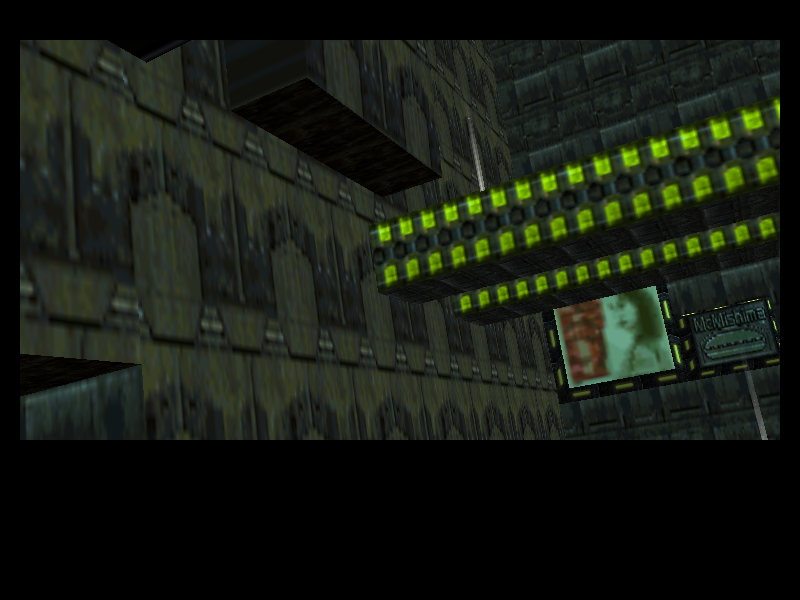
Graphically Daikatana is kind of a two level affair. Basically you can divide the graphics into two categories: character graphics and background graphics. The background graphics are – it's pretty fair to say – very nice indeed! Daikatana makes great use of the expansion pak to produce some gorgeous high-res landscapes and scenery but even without the expansion the backgrounds still look excellent. There is an impressive mixture of scenery and locations over the four main stages. The first episode is a mainly techno world, with lots of metallic greys, advanced computer monitors and flashing neon signs. Other levels include snowy medieval villages, Greek-style temples and palaces and even the famous Alcatraz prison, there's plenty of variety. None of the levels looks too samey which makes the game much more pleasant to play. Unfortunately the character animations aren't quite as impressive. That's not to say that they're bad by any means. And it should be made clear that there are tons of different characters in this game too. The problem is that this title has obviously been in development for some time and the graphics for the characters now look a little dated. Up close a lot of the enemies for example look a little rough and the explosion animations are fairly basic and a little repetitive.
All that said though, the overall look of the game is a fairly impressive one. The weapons themselves all have extremely good animation and work in a variety of different ways rather than just being variations of different machine guns. Plus if you do play this game in high-res then you'll be hard-pushed to fault the visuals for crispness and clarity.
In addition to the various NPCs that you meet in Daikatana there are also a number of different puzzles to be completed on each level. While these are never incredibly complex, a lot of them are nevertheless a little more involved than just finding a key or pressing a switch. Lots of the tasks involve manipulating various areas of your environment – pushing things, shooting things and so on. You won't need a fantastically high IQ to complete them, but it does add important variety to the gameplay.
The controls in Daikatana are one of the most impressive set-ups to be seen in a first-person shoot-'em-up so far. Your character is fairly versatile and it's difficult to say why, but for some reason it's a lot easier to move and aim in this game than in others like Turok 2. The controls are very similar to Acclaim's recent hit but the handling just feels a lot smoother and far more responsive.
RPG-Esque
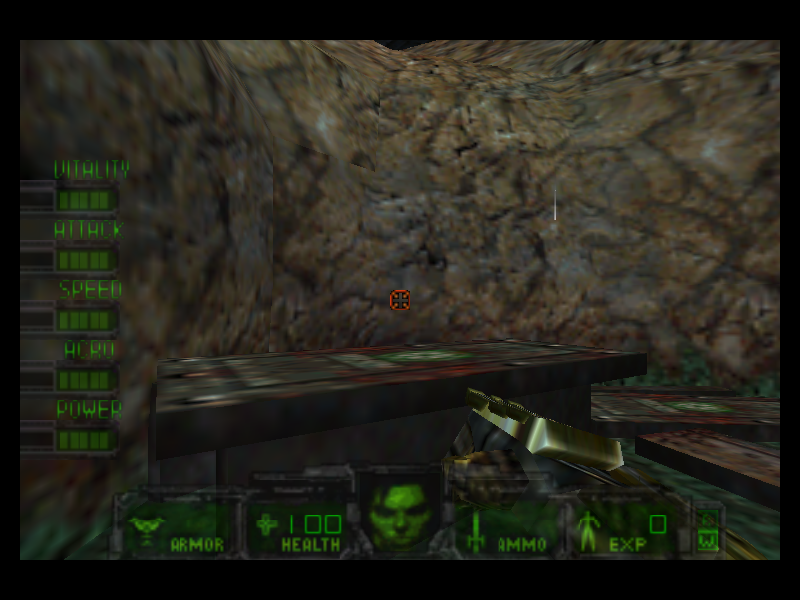
Now it's already been mentioned that Daikatana shares elements of gameplay with Hybrid Heaven, and while character-interaction is one of those elements it's not the only one. When you first begin the game you might think that your character moves fairly slowly. And he does – relatively – but there's a reason for this. Down the left side of the screen there is a list of stats: vitality, attack, speed, agro and power. Each of these has five levels as indicated by the five green blocks underneath them. Although Daikatana isn't an RPG, just like in that style of game as you successfully complete sections your statistics increase and you become a more effective character. They're all interlinked so that while speed is fairly self-explanatory, attack, agro and power all affect your character's offensive capabilities as well as influencing other factors too – like the damage that he takes from enemy shots.
As you progress through the game you get messages that let you know when one of your stats has increased. It's safe to say that the text hasn't been directly translated though. It's difficult to imagine the Japanese with their reputation for politeness sticking in a message like: "Your attack skill has increased, now go and kick butt!"
Multiplayer Mayhem
The stats play an important part in the multiplayer version of Daikatana too. Up to four players can compete in two different games, one a standard deathmatch affair and the other a kind of treasure hunt. Whenever you make a kill in deathmatch mode – as in the one-player game – one of your attributes increases. This has the rather interesting effect of making the person with the most kills faster and stronger than the people he terminates. This could be viewed as a little daft because it means the most talented player basically ends up with an all-conquering super-powerful character!
The second multiplayer game is a little different than ones we've seen in this kind of game in the past. The object of the game is to collect five different coloured jewels. Now you'd think that this would mean you'd all just be running around the level as fast as possible and whoever found five gems of a specific colour first would win, wouldn't you? The catch though is that there are only five gems in total and once someone has picked one up they don't relinquish it until they die. This means that while there is an initial scramble to find the jewels at the beginning of a game, once all the gems have been collected it becomes a case of hunting the players with the stones and trying to defend yourself at the same time. This can mean that loyalties change as players combine forces to gang up on any player who manages to gather a number of the jewels. The closest thing to this style of gameplay is an old 8-bit title called Spy Vs Spy. In that game two players had to gather a number of different objects from various rooms in order to win and had to steal some of those objects from each other. The result in Daikatana is a game which can last for absolutely ages!
Ain't It Cool?
This game has an awful lot going for it. The variety in the levels, the range of weapons and the fact that it isn't just a straight 'kill everything' shoot-'em-up gives it the edge over other similar titles. Throughout the game various cut-scenes further the plot and while at times these scenes can be a little long-winded they do nevertheless give the whole thing a sense of purpose – ie: you're not killing things and wandering through the different levels just for the sake of it.
Daikatana might not be everyone's cup of tea – Quake fans might not like all the cut-scenes and the fact that you have to use your brain, while serious RPG fans will probably find that the puzzle-solving and character-interaction elements don't go quite as far as they might like. However what Daikatana does offer is a different type of game and one that we haven't really seen before on the N64. It's great fun to play in one-player with a lot of depth to the gameplay and the multiplayer is good enough to keep you going even after you've completed the single-player mode – which incidentally isn't very easy to do! If you like your action first-person then go out and get yourself a copy of Daikatana. If you've stayed clear of games like this up till now because you've always felt that they were a bit mindless, then now's your chance to get your hands on a seriously enjoyable shoot-'em-up which requires more than just a little bit of thought to play. What are you waiting for? Get down to your local software store now!
There's a brilliant feature on our website that lets you track the number of players playing a particular game online. Dominated by Half-Life, the amusing stuff is down the bottom where you can find the bargain-bin tat battling it out for the title of 'least played online game'. At the time of this review Daikatana was marginally ahead of Deer Hunter, although strangely it was registering just one person as being online.
I went back the next day and there was still one person roaming around trying to find someone to play. And then it hit me. After Daikatana was flayed alive by the gaming press John Romero refused to accept the verdict, claiming that the game was, in fact, brilliant. What are the chances that he's still out there now, eyes fixed on his server list like a spider waiting to trap an unsuspecting fly, in a last-ditch bid to clear his name and prove to the world that Daikatana is actually a misunderstood gem from a maligned genius. It's not, of course, but neither is it the worst game ever. I reviewed the game first time round and stand by my score of 53 per cent. If nothing else, at this price it gives you the opportunity to see what might have been. A chance to see where it all went wrong for one of the most hyped, delayed and ultimately flawed shooters in history.
What we thought
"We've given it a fair go and the game just doesn't cut it In our opinion it's no better than Quake or SIN, and it's streets and streets behind Half-Life, or even Soldier Of Fortune."
What you said
People say:
- "I played your demo of Daikatana and, to be perfectly honest, it's the worst 3D shooter I have ever played... ever. The AI is awful, as the monsters seem to appear from nowhere and relentlessly attack you. The architecture and level design are just completely dreadful -on occasion, I even got stuck down corridors. The sounds are annoying (especially that annoying dragonfly thing). The display is over-cluttered, and would be better with the Half-Life weapon management system, rattier than the annoying bar on the right of the screen. Even Quake didn't display your weapons in a huge 3D window. In your review, you seemed to have nothing nice to say about Daikatana- and yet you gave it 53 per cent. It deserves about 12 per cent, perhaps even less! What has John Romero been doing for the last four years? It's a major blow for Ion Storm's reputation, and it makes you wonder whether or not Deus Ex will be worth the wait."
- "After reading the review of Daikatana in your last issue I thought that you were probably being a tad unfair. I thought (foolishly) that you were just taking out your anger on it because it was an easy target (being delayed enormously and the reputation of Romero hanging in the balance). Oh how wrong I was. This is the worst excuse for a PC game I have ever seen. I couldn't un-install it quick enough. Fighting mechanical frogs and crane flies with a peashooter isn't my idea of fun. I just hope that people listen to your review instead of buying it because of the over-hyped previews that the game had. I admit I was wrong and I am sorry. Maybe they should replace the 'funny' quit game message with 'Do you want to buy this game?' or 'Are you glad you bought this game?' instead. This would certainly be a clever and witty way of keeping people playing. I am glad you helped me choose the right path as I could have actually bought this pile of pants when it finally arrived on the shop shelves."
- "After I read your review of Daikatana, I was incredibly pissed off; the entire thing sounded like the words of cynical teenager. What right did you have to slag off a game from the likes of John Romero? You most probably just took off marks for its lateness. With a sense of smugness, I went off to buy it. Then, 20 minutes later I was groaning in misery and smacking my head against the monitor. I sobbed as a monster ran into my line of fire. I screamed when a mechanical toad killed me. I gritted my teeth as line after line of crap dialogue was spouted. I had just wasted the best part of $50 on a CD only worthy of being a coaster, a Frisbee, an ashtray or a gun target (the last one being the most preferable). If I have the chance, I'll wipe my arse with it. So please, believe PC. And John Romero, I hope you and your shitty Ion Storm be damned to Hell. And you can shove that sword where the sun don't shine."
- "Daikatana is a beautifully crafted and designed game and easily puts all other FPS games to shame. The levels are simply magnificent and full of new and brilliant ideas. The enemies are very intelligent and the sidekicks are like playing with friends on the Internet. The weapons are brilliantly designed and have effects that will send you into a dream world. And can you actually believe Daikatana runs on the Quake 2 engine? It looks magnificent with unbelievable textures and beautifully curved surfaces. Of course all this is what John Romero wanted to read about his pride and joy, but actually Daikatana sucks. And when I say sucks I mean that this is the most unattractive dim-witted, lousy attempt at an FPS ever. I think even if it came out when it was supposed to, it still would have sucked."
Comment
As you can see, the derision for Romero's misconceived and obscenely ugly baby is universal. It's a miracle Eidos didn't abort the project, and we'll be sending the man himself a box of programming prophylactics to avoid any future embarrassments.
Dallas, Texas: February 1999. Atop the Ion Storm skyscraper, the cream of the UK gaming press is assembled for a final look at the heavily delayed Daikatana prior to its pending release. Or so we were told. Over the course of a three-day visit, we were given a perfunctory run through of some of the single-player game, and had a swift dabble on an average DeathMatch level. There was no sign of the promised sidekicks, and the mythical Daikatana sword was yet to be implemented. In fact, the closest we came to any real gameplay was in the Ion Storm common room, where prolonged bouts of table tennis and pool ensued, not to mention the arcade classic Scramble (which yours truly actually managed to complete). The long and short of it is that Daikatana was nowhere near finished, and we might as well have gone to Blackpool.
If you're not familiar with the Daikatana saga, the game was originally due out in the Spring of 1998, but difficulties integrating the Quake II engine led to major slippage, the situation not helped by a sizeable number of the team later walking out. Back in February, John Romero explained: "The thing is I've never before had to say when I'm going to finish a game. I started working on it and when it was done it came out." He was still confident though. "It's awesome," he beamed. "The game is just really cool.
I know Daikatana is going to be a great game. I want the game design to be the thing that really sets the game apart. In Half-Life what really set it apart was the design. It used the Quake I engine with coloured lighting, know. Okay, so it's using this old technology but it's the game that really mattered. That's just why everybody remembers it."
Clearly, the first-person goalposts have moved since the release of Half-Life. Romero wasn't fazed though, claiming: "It helps us that they came out first. I don't think it hurt us at all. It helped us that it came out and we could see how much people really do like a well-directed story game and it just makes us feel great - they're gonna love this game."
Four Play
As for the story, it embraces all manner of cod mythology and spans four different time zones and locations, namely Japan, Ancient Greece, medieval Norway and futuristic San Francisco. Each location has completely different environments, weapons and enemies, and as Romero says, "It's pretty much four complete games in one where everything changes. No-one's ever done that before. It's totally cool. It's like playing a game like Chrono Trigger where all of a sudden - boom - you change time periods and everything is different, all the graphics are different, and you think, 'Wow I have to explore another world again'. People that got the shareware version of Doom, they'd download it, play it and finish the shareware version. They thought they'd played Doom, been there, seen it, done it. Dude, there were two more episodes of Doom, y'know. They'd play the first episode and consider it was the most badass game ever. So they'll play Daikatana, starting with the first episode and think, 'Wow, that was really cool, that was really great'. Boom! Go to another episode. 'Holy Cow! Y'know, this is totally different. Boom! Oh my God, this is different again. Boom! Jesus Christ, what's going on?' Then they'll finally finish the game at the end of the fourth episode."
We finally finished and left him to get on with it and returned home to await the inevitable new release date. A token announcement of September was made, and the world shrugged.
Sarf Of The River
Fast forward then to the end of October and a room in Eidos' Wimbledon HQ. Ten PCs are up and running, each with a shiny build of Daikatana installed, offering eight of the eventual 24 single-player levels and a couple of DeathMatch maps. Several hours of play followed, garnering a mixed response from the assembled loafers. It's certainly playable, but still lacking in sidekicks, and with the eponymous magic sword being kept as 'a surprise'.
Also present was top Eidos bod, John Kavanagh, who has spent most of last year in Dallas overseeing the Ion Storm operation. He remains confident: "It's fun, it's action-packed and it's a great first-person game. People are waiting for more of that, they want more, there hasn't been anything for a while. All these supposed Quake-killers, a lot of them didn't appear - this is the one that has. It doesn't necessarily stand head-to-head against Half-Life, but I think it stands up to it. It's a different kind of game. What John was trying to do was follow up his games, not what anybody else was doing. So; what is Daikatana? It's the follow up to Doom and Quake."
That's fair comment indeed, and the influences are plain to see as the lineage that was started by Wolfenstein continues into the next millennium. Whether that's what the public want will become clear this Christmas, when it finally goes on sale. If nothing else, we can at least confirm that the game does actually exist.
Romero is the only boss who actively encourages you to abuse him. When we deathmatch, we're calling each other "butt" (a stream of invective follows. The salty stream of language continues for at least another two minutes) and "arse licker".
We're speaking down the dog and bone to one of the ten-strong Ion Storm team currently working on Daikatana. "The funniest is when Romero plays Shawn Greene (ex-id bloke, now coder on the project). The amount of abuse is so funny. If Romero loses, he'll break something. He smashed this keyboard up the other day. I swear to god - the carpet still has little keys all over it. Shawn has this mouse that Romero broke hanging up in his office like a trophy."
The Ion Storm office is in the Texas Commerce Tower, a rather large building with a hole in it. Sixty people - sixty loving, caring gamers - live here in holy matrimony with their projects. The office is blissfully quiet, all bar "the muffled thuds of rocket jumps and the sound of imperial troops being denied reinforcements".
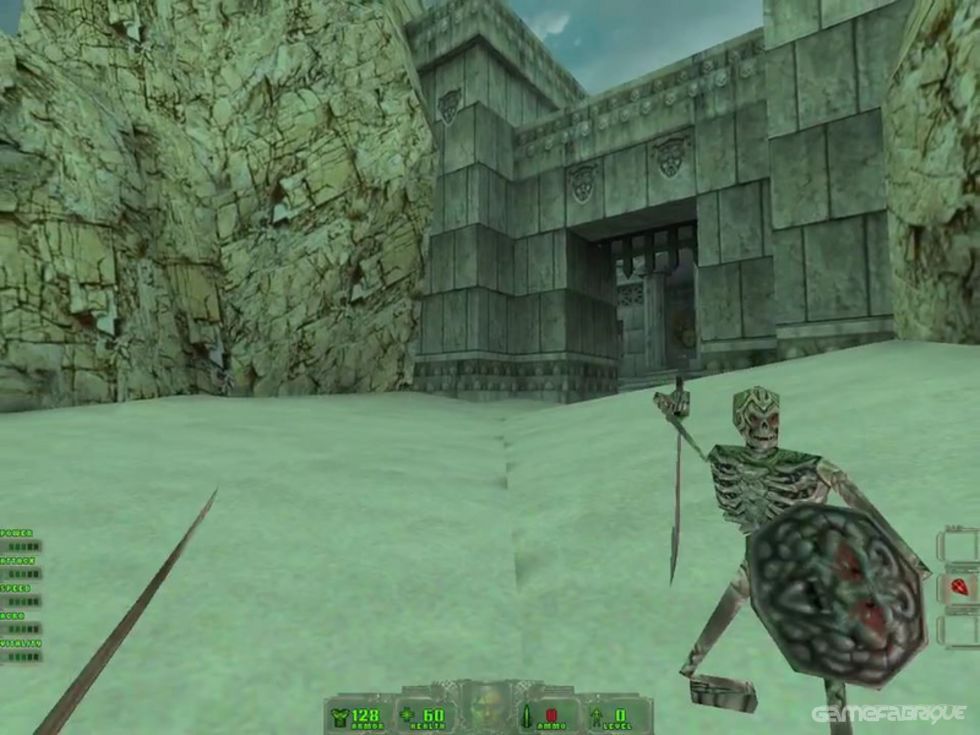
"If you wanted to, you could totally spend your time playing deathmatch here - and get paid for it," says Andre Sverre Kvernmo, one of the level designers on Daikatana. "Most games take place after 6pm so that people can be a bit productive. The biz section play among themselves because they're scared of us." Daikatana literally means "big sword" in Japanese. It's magic. Look, here's the plot to prove it...
The year is 2455AD. Way way back in the 21st century, Tetsuo discovered the cure for Aids and as a result became really rich. He built himself a fortress, but continued to be interested in adventure, and especially in an ancient sword - Daikatana - which is supposed to have magic and timetravelling powers. After years of searching, he discovers the sword during an archaeological dig on Mount Fujiama and Toshiro and his assistant, Jarred Benedict, start researching its magic powers. Unfortunately, Toshiro has been somewhat lax in his interview technique and has employed a power-mad sociopath as a lab assistant. He swiftly lops the aged scientist's head off, claims the Daikatana for his own, and whips back in time to steal the formula for the Aids cure and become fabulously wealthy. Both you and your luscious Japanese friend, Mikiko, were experimenting with a time-stasis bubble at the precise moment history changed, and step out to find everything has changed. Toshiro is dead. The Daikatana is gone. And history has been changed. Jarred is now the inventor of the Aids cure. And it's his fortress you're standing in.
So, in the first episode, you, Mikiko, and SuperFly Johnson (a "big thick dude" you find in the dungeons) storm the Fortress, aiming to steal the Daikatana and set history right again. Once you've got the sword, you aim to go back to 2030AD and kill Jarred Benedict as he appears. Unfortunately though, there's a bit of a balls up.
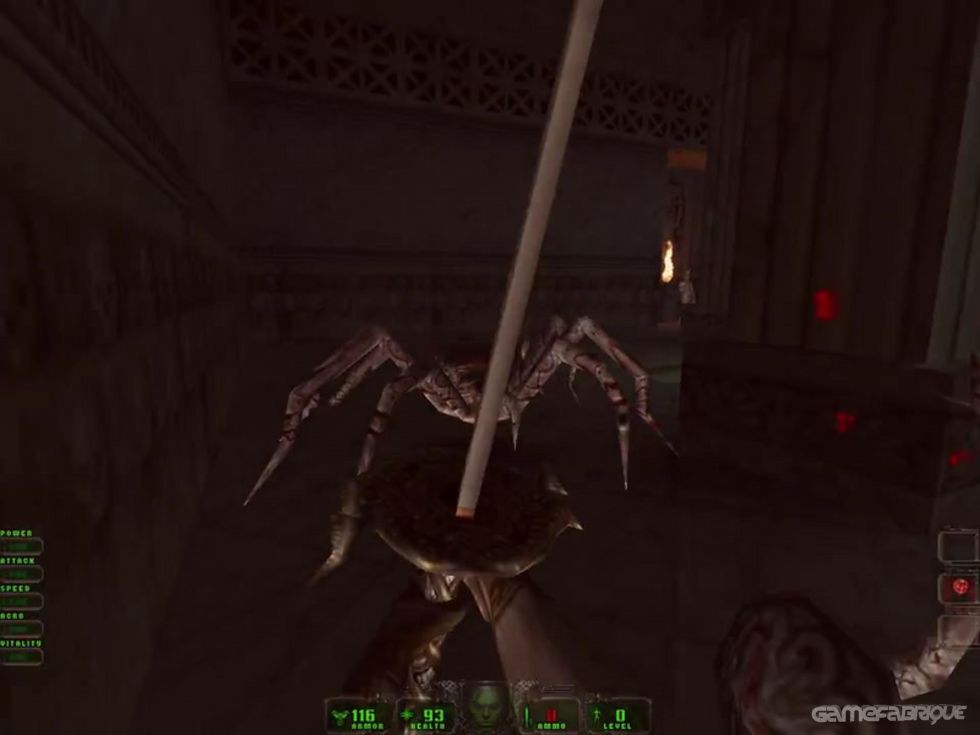
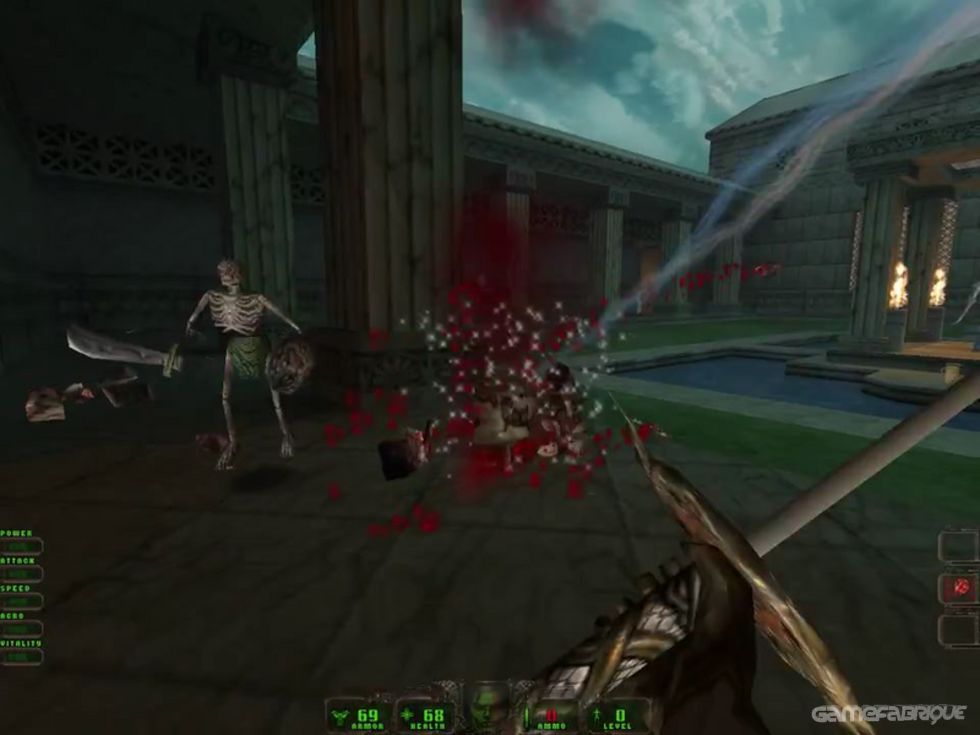
The wrong switch gets flicked and the trio end up in 2030BC. Stuck in Ancient Greece and pissed off. So the gist of episode two concerns finding more energy for the sword. But then when you teleport into episode three, you find yourself in 560AD, the Dark Ages. Doh! Not enough power. But finally in episode four, you get to 2030AD, and after much chopping and severing of limbs, have a showdown with Jarred. But then there's "a surprise ending and shit".
As Any Quake Buff Will Tell you, the key ingredient to any 30 shoot 'em up is the levels. You can chuck in as many wazzy graphics as you like, jam in a wealth of juicy Satanic imagery, big steaming weapons, and then top the whole lot off with a 3D engine that would make God Himself say, "Hmmm, that's pretty realistic. I might use that engine on my next project." But if you don't have credible, exciting, good-looking and playable levels, you might as well hang up your game-designing trousers and sell yourself down the docks.
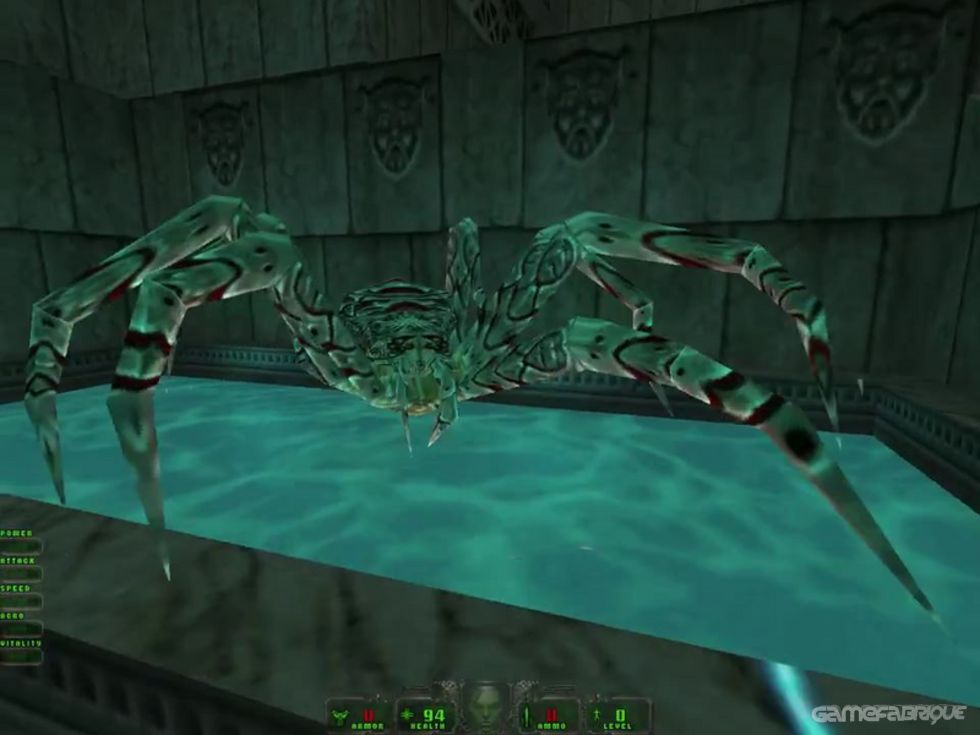
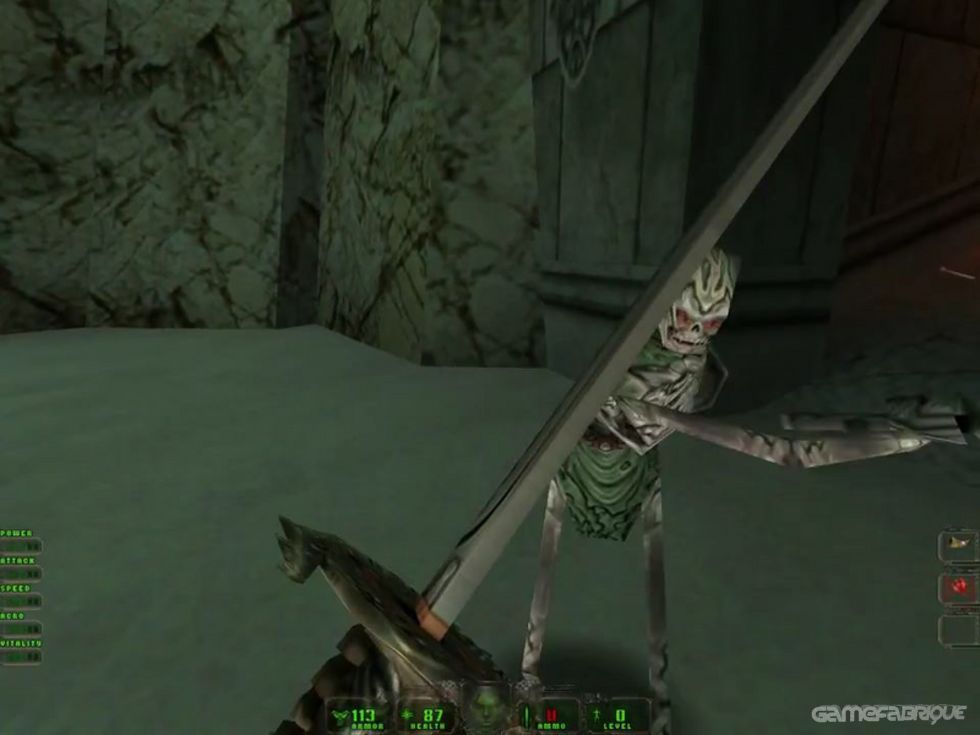
To that end, at the start of the Daikatana project, Mister Romero set about gathering himself a set of highly talented level artistes to form his core team. And where, you may ask, did he recruit this talent? Not from an agency or by advertising, but via the Internet. As you are probably all aware, the on-line amateur level designing community, spawned originally from Doom and then Quake, is huge. Romero already knew who he wanted, so he simply went out and got them.
"He just told us to pack our bags," recalls John 'Dr Sleep' Anderson, who's working on Daikatana's Greek era levels. "I said, 'When? Next week?', and he replied: 'No, now!' Two days later I was in Dallas, staying at Romero's house."
Only a year ago, Dr Sleep and his fellow level designers, Norwegian Sverre Andre Kvernmo, Matt 'DaBug' Hooper and Steve Ruscoe, were all doing their nine-to-five jobs during the day only to then live alternate lives in the evenings - namely slamming together Quake levels. Hooper is famous for one achievement in particular - producing DaSkull, the first custom-designed Quake level. So what? you might say. Well, the thing is Hooper didn't use an editor or a graphics package - he used a text editor.
"Everyone went crazy - they thought I was joking. There were no editors available, but I had some graph paper and sketched it out. I didn't think it was a big deal, but then once it came out, suddenly I was a celebrity. Some people still won't believe that it took me just a week and a half." The other members of the team have similar stories to tell. Dr Sleep was picked up by Epic to work on early versions of Unreal and then made his pilgrimage to Dallas. Sverre Kvernmo used to live in the UK (regular readers of may remember articles about his talents) before being snapped up by iD to do the Master Levels for Doom.
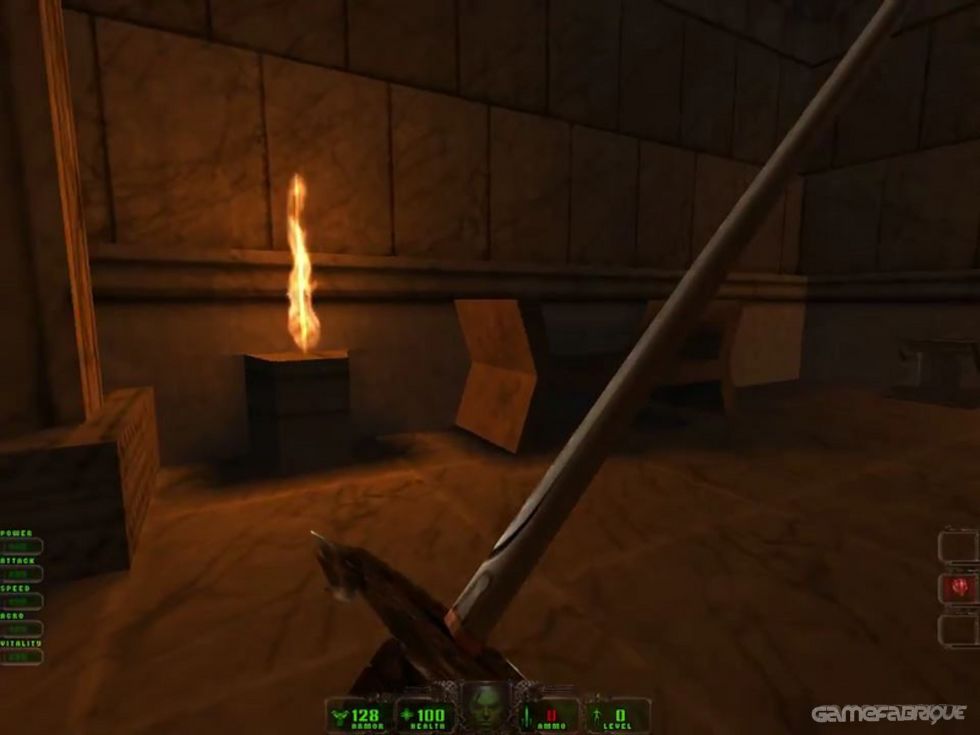
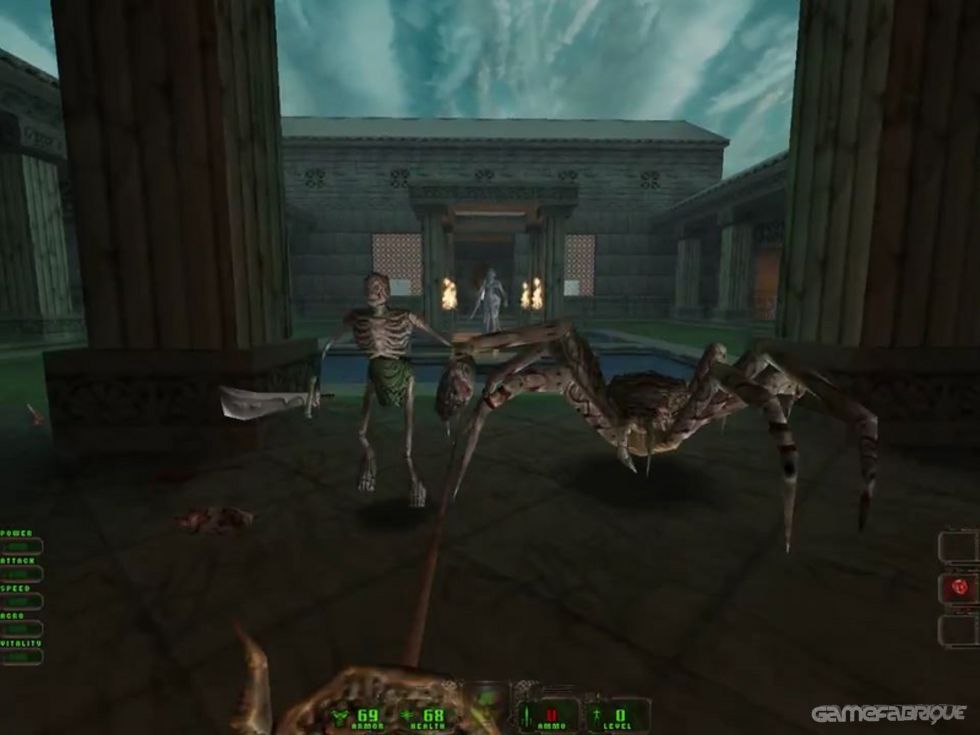
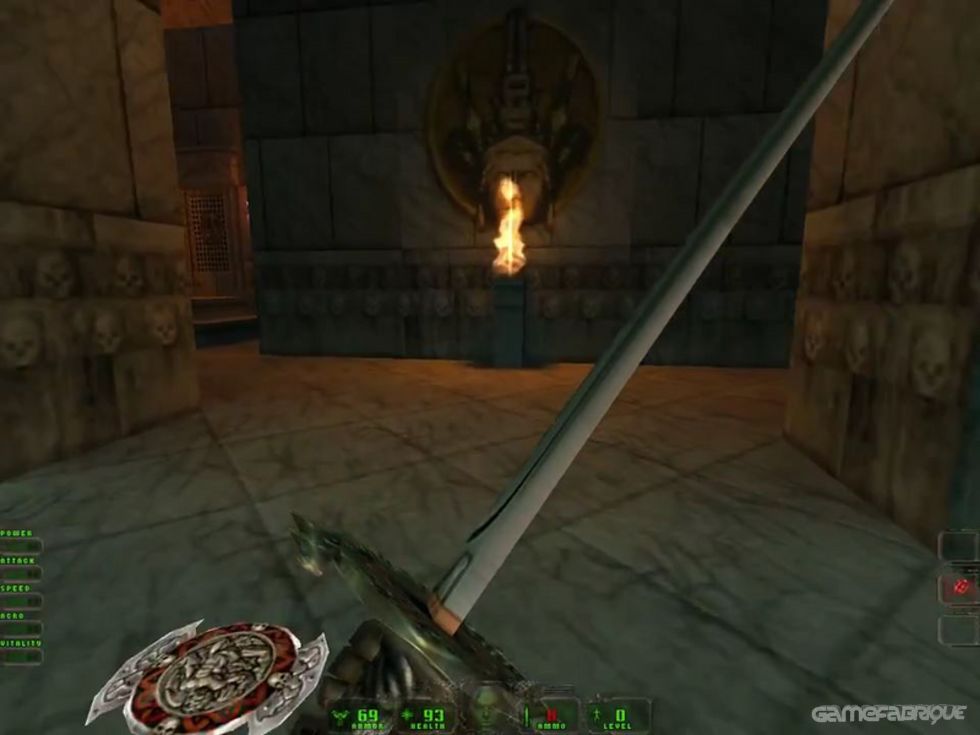
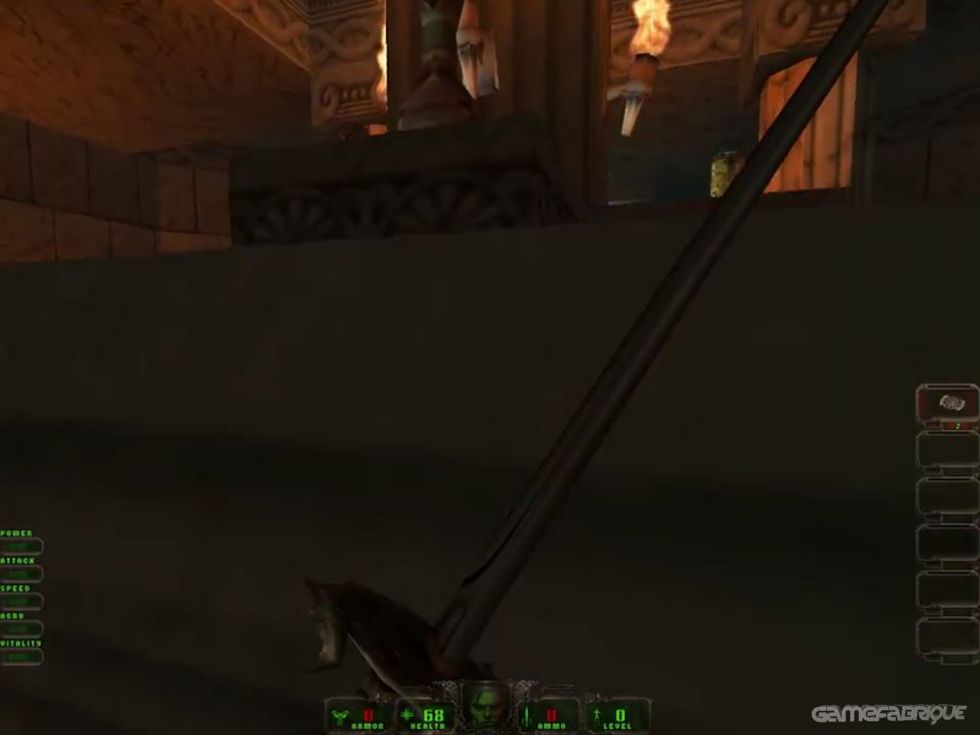
And now, three years on since they were all wandering Knee Deep In The Dead, here they all are in the Ion Storm madhouse working steadily but surely on Daikatana's timetravelling episodes.
Sverre is currently working on a virtual scale-model of Alcatraz for the final San Francisco time zone. You can take a little tour of the cells or the showers, and then go outside to the watchtower which, we've been assured, will collapse noisily and pleasurably at the end of the level. Every little detail is now in place: the mottled staircases, the gruesome sewer system, rows of blinking fluorescent lights, the fear of sodomy. It's taken Sverre a month's work to get to this stage. "I really didn't see this career coming at all," he says.
"I've been playing games for years and years, and it's really amazing that I'm here at all. I wanted to be an architect or do art, and this is dead in the middle between the two."
Most of the levels are on the verge of completion. Matt Hooper's medieval environments, with their caverns and fields and wooden houses, are now finished. Steve's futuristic first episode opener has only a few nips and tucks to go. And Sleep's glorious Greek project - half Ray Harryhausen, half Up Pompeii - is looking both shiny and excellent. There's still a little way to go, however.
"We've got the Quake 2 code dump now," explains Sleep, "which means we now have to go back and implement the new features it gives us. Most important of all is the coloured lighting, but also the face count."
Face count? "Yeah, when you're designing levels, you're fighting this limitation all the time," says Hooper. "Put simply, with basic Quake you can only have about 350 polygons or faces in the view. With Daikatana we're pushing for 500 to 600 faces. One monster has around 500 polys, so in any one view, you can only have as many polygons as there are on one monster." Consequently, the boys don't have free licence to create vastly intricate ballrooms and rock structures. Every new feature in their levels is a fight between aesthetic quality and whether it will run well on Joe Schmoe's Pentium 133 - a fight that often results in some heartbreaking sacrifices. "You've got to fight that and yet still remain creative," says Kvernmo. "I have these cool rocks on one of my levels that look so realistic. But the face count was too high; it was slowing the frame rate down, even on my Pentium II. So in the end they had to go."
If you harbour desires about designing levels (and let's face it, we all do), you may think these boys are not only both lucky and privileged, but that Romero also fuels them with cookies and high-end machines to keep them going. The reality however, is that most of the designers, for example, have scorned iD's own level designer and use a shareware level editor called BSP instead. "It's the best," says Hooper. "There's nothing you can't do with it."
So readers, what's to stop you? If you're thinking of delving into level design, remember it's doesn't only involve stringing a couple of rooms together. It takes an average of four weeks to build a good-sized Quake map. Starting from scratch with maybe a half-formed idea in their heads or a graph-paper sketch, these boys painstakingly piece together their rusted dungeons, toxic waste depots and bombed-out warehouses. They carefully choose the frayed wallpaper. They place and position flickering lights to create swathes of shadow or alluring traps. They move objects, enemies and weapons to optimum positions. They pace your progress so you don't get bored, too scared or too lost. They design secret areas to further titillate your brain on return visits. They may start you off in a pretty room and then gradually unveil the rest of the level and break it around you. Or they may just start you off smack in the middle of an earthquake and pepper your escape route with oubliettes, broken elevators and crumbling floors.
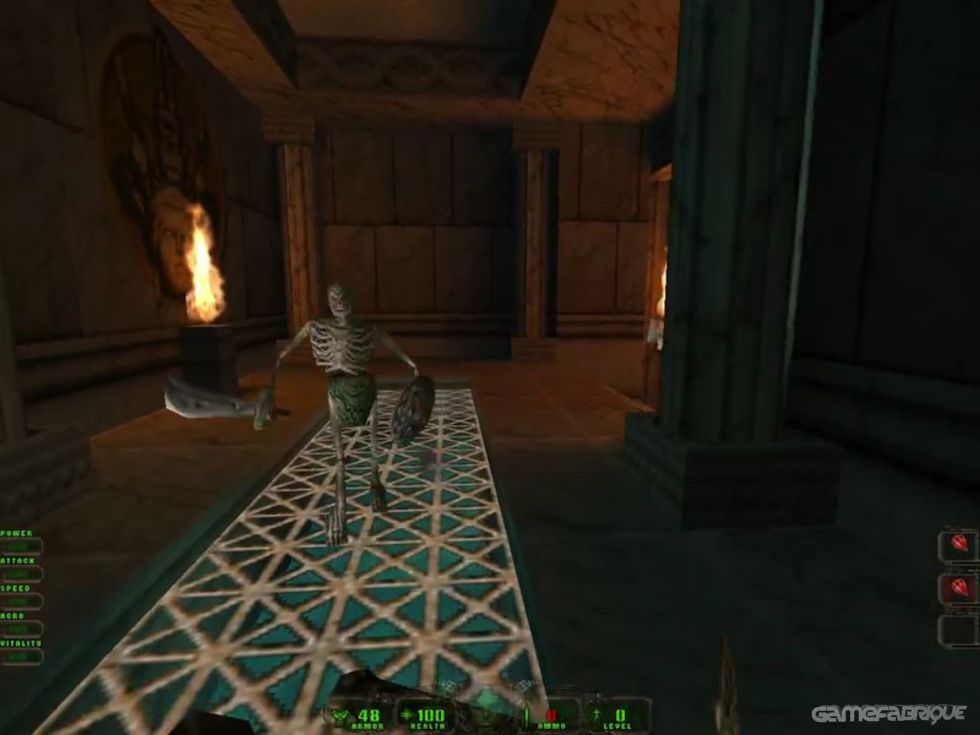
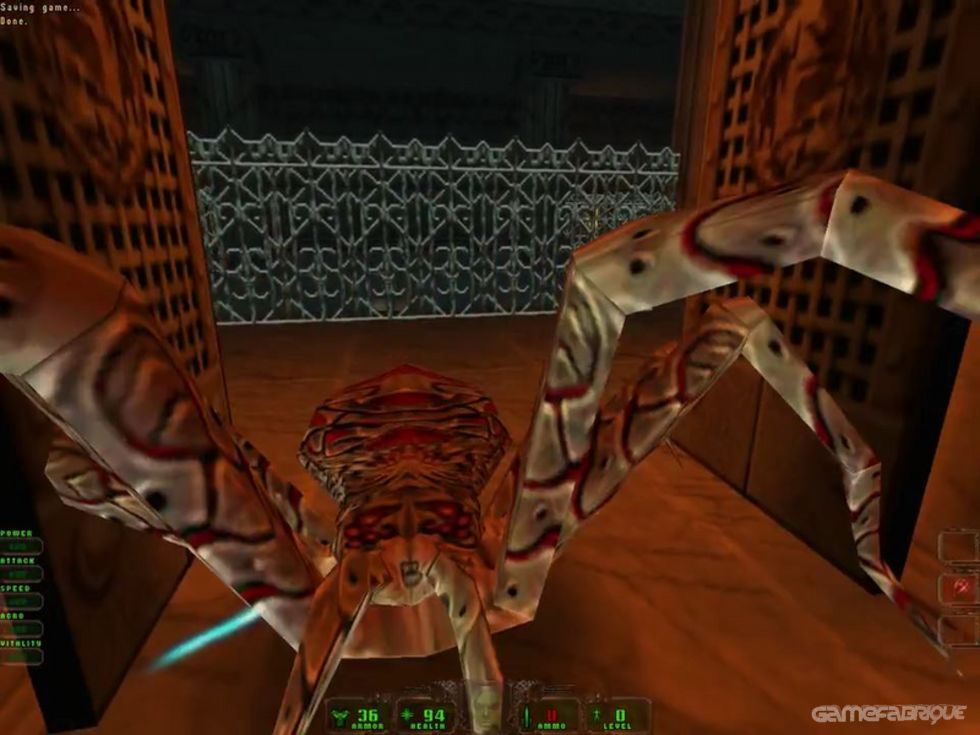
Then they play it over and over again, a zillion times, until it pleases them and scares the merry hell out of you.
Only then is it close to being finished. Got that?
As John Romero's "dream game" nears completion, the gang at ION Storm is kicking into overdrive. Wielding the Daikatana, a magical, timetraveling samurai sword, you'll venture from the Dark Ages to ancient Greece and on to a futuristic San Francisco, setting history straight along the way. Using id's Quake II engine, Daikatana will feature 64 monsters, 32 weapons, and 33 original songs throughout four worlds, each with its own enemies, textures, and architecture. Throw in some RPG elements and two sidekicks (each with their own A.I.), and you've got the makings of a cutting-edge game with a real cutting edge.
While Ion Storm has taken its well-publicized time to complete Daikatana, the PC gaming world has evolved. The deathmatch demo of John Romeros timetraveling shooter featured fast weapons and action, but the two playable maps (future visions of San Francisco and Kyoto) pale next to Half-Life's detailed environments and Sin's gritty urbanscapes. At this stage, the game looked and played like the Quake II conversion it is. Gamers can only hope that the finished products single-player mode will be as inventive and engaging as Ion Storm's promised it will be.
Overview
Kage Mishima has stolen the Daikatana, an ancient Japanese sword possessed of amazing mystical power. With it, he has returned to the past and changed the course of the future, setting himself up as the ruler of planet Earth. The only hope for the planet lies in the hands of Hiro Miyamoto, descendent of the weapons master that originally forged the Daikatana. He’ll battle through four time periods in search of the Daikatana so that he might kick some medieval butt, and fix the future.
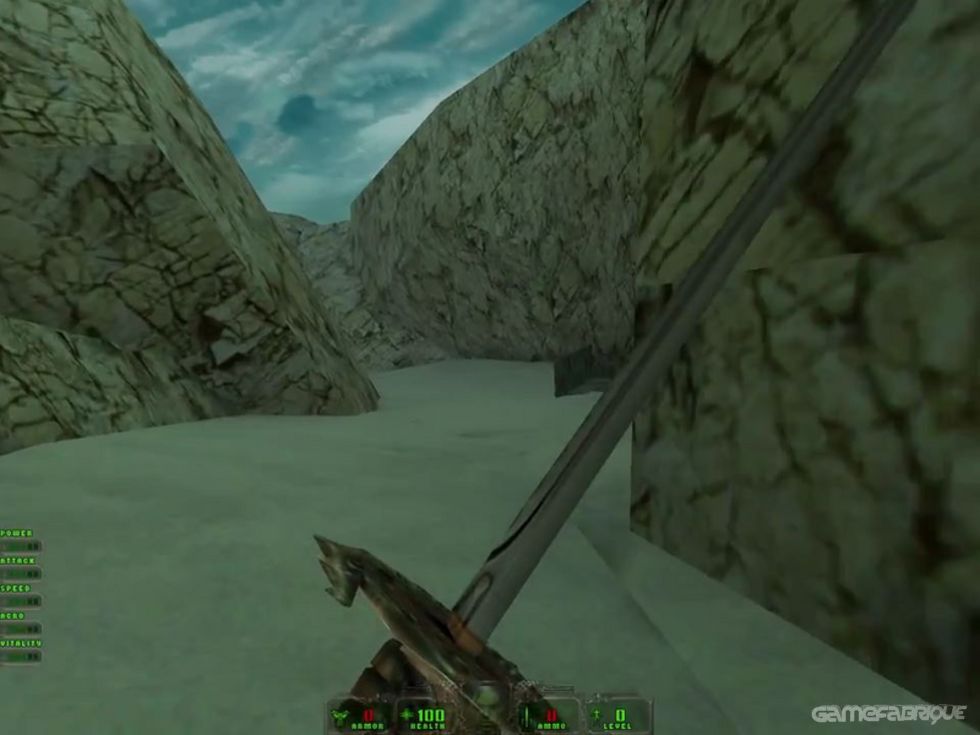
A sword that travels through time. Sidekicks with breast implants. Names like ‘Superfly Johnson.’ Worst of all, a main character named Hero. (They can get away with it because he’s Japanese, and you can spell it Hiro.) ‘Tis a hard thing to reduce me to a gibbering madman, but the sheer amount of cliche in this game has done it.
Daikatana, one of the latest releases from Ion Storm, tells the story of one man and his four year journey to create a game that fell just short of purchasability. The brainchild of John Romero, of Wolfenstein 3D and Doom fame, Daikatana uses a modified version of the Quake II engine to bring us a cinematic and violent glimpse at a fictional dark future. Unfortunately, this game is neither fun to play, nor much to look at. Let me explain.
Gameplay, Controls, Interface
The first thing that will hit you is the simple and rather adolescent approach to gameplay. Using a control system that mimics the earliest First Person Shooter (FPS) games, all you really need to do to play this game is know how to jump, shoot, and run. There aren’t even any inventory items to really worry about, as you’re pretty much limited to pickup items and seven different weapons.
At the main screen, you’ll find an interface that, while designed adequately, is an eyesore. The color scheme used by the designers relies on a heavy amount of black and brown, with a healthy dash of poorly animated buttons. Combine that with a ‘Loading’ screen that counts from one to one hundred, with an audible click every time it advances a percentage, and you’ve got an interface that may just convince you to stop playing.
With three out of three strikes in the gameplay department, things aren’t looking too hot for Daikatana so far. Most of the action involves running, jumping, and shooting. Now, I’m not saying that these things aren’t staples of the FPS genre, but given the advances we’ve had in the last couple of years, Daikatana could be much more interactive than it is. A level that can be finished by simplistic puzzles like blowing up a power generator or flipping a switch are welcome in their simplicity, but they shouldn’t take up the majority of gameplay.
Graphics
Before you start thinking that there isn’t anything worth purchasing about Daikatana, you might want to take a look at the graphics.
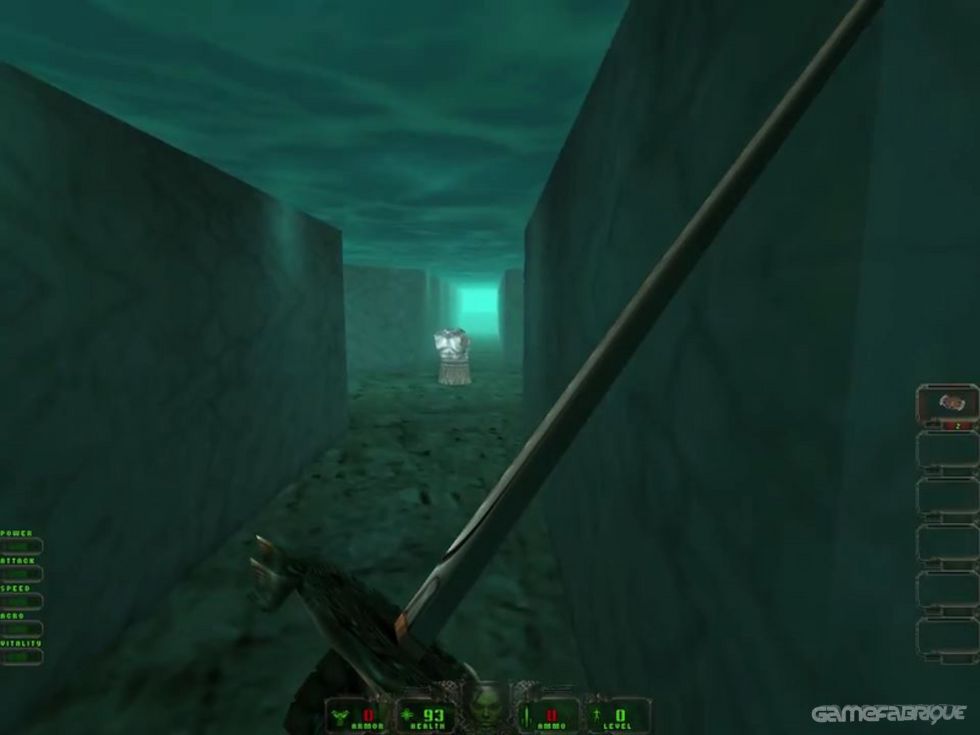
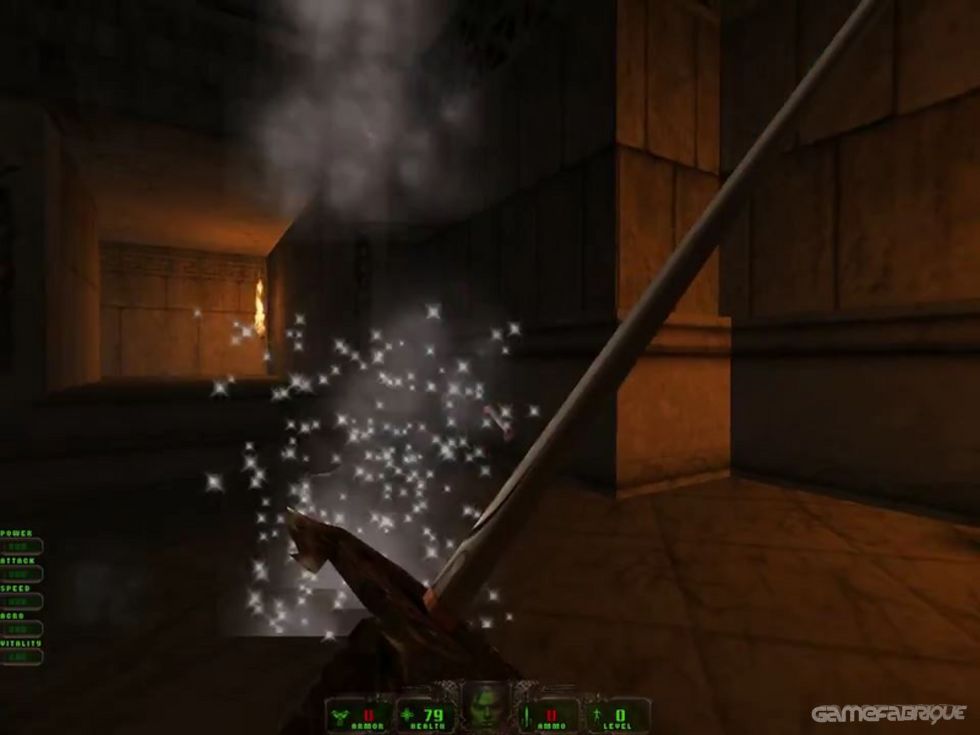
Starting out, the game is built on the Quake II engine, which has a proven track record for providing a good graphics base. Daikatana hasn’t changed most of the features of the engine, rather they’ve focused making the features of the world very different. Gone are the smooth steel panels you’d expect to find in such a game. Instead, they’ve been replaced by a serious amount of focus on outdoor, open air areas, complete with flora and fauna.
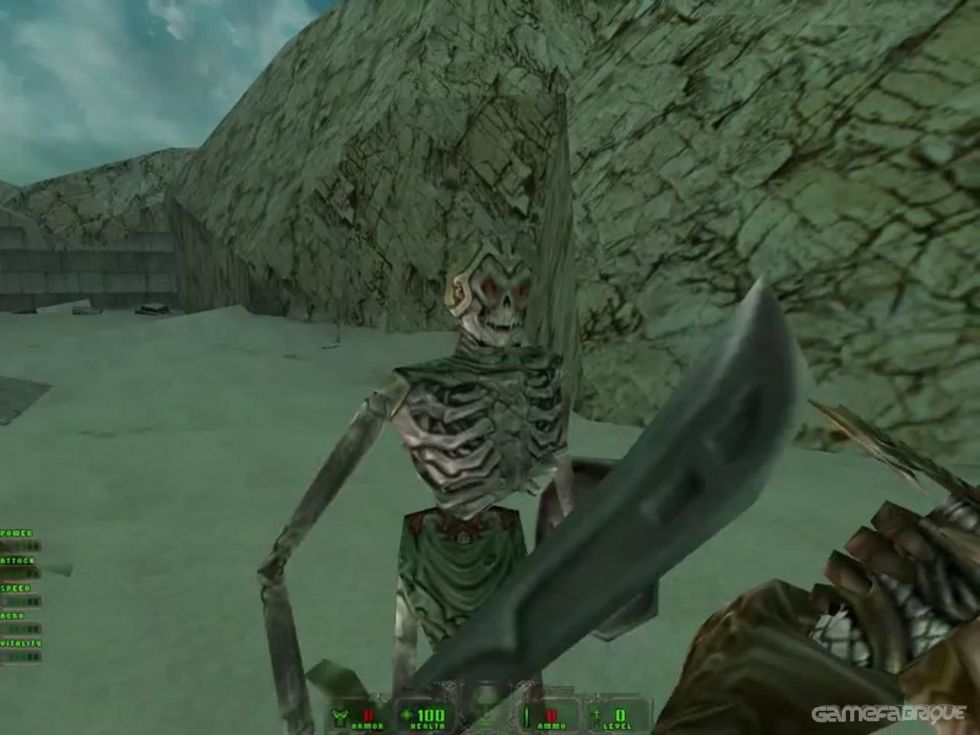
Another strong point for the graphics is the enemy design. Although there exists a wide variety in enemy quality, it is quite clear that Ion Storm has designed these creatures with strangeness in mind. Elaborate techno-organic creatures and a good sense of scale help to bring these nightmares to life, and a skeletal animation system allows them to move in a slightly realistic way.
Since nothing about this game has been handled truly well, I’ve got to knock the graphics as well. While they aren’t as dated as a game like, say, System Shock 2 (nowadays at least), they definitely don’t innovate the technology at all. That, combined with the mind numbing overuse of primary colors will quickly dissuade you from believing that these graphics have any good points to them at all. But before you give up and quit because the entire level you’re on is in shades of green, try pressing on, and get to the next area, to see all of the shades of red!
Audio
Nothing new or interesting, although Daikatana has a remarkably miscast number of voice actors. For instance, the main character, Hiro, may be Japanese, but he sounds like an irate leather clad biker. Other than that, the audio isn’t going one of Daikatana’s weakpoints... unless of course, you choose to play the cyber-mosquito sounds over and over again.
System Requirements
Minimum: Pentium 233MHz, 32MB RAM, 200MB HD Space, 4X CD-ROM, 4MB OpenGL Video Card, DirectX Compatible Sound Card, Windows 95/98/NT/2000, Keyboard and Mouse.
Reviewed On: AMD K6/2 400MHz, 64MB RAM, Diamond Viper V770 Ultra, Creative Labs Soundblaster AWE 64, 24x Creative Labs CD-ROM, and a Microsoft Sidewinder 3D Pro.
Bottom Line
The first term that comes to mind is steaming pile of cow dung. However, upon further review, Daikatana does have some redeeming features. It has some decent graphics and a few of the levels don’t overuse one particular color. In the end, Daikatana was a painful game to play. Although it wasn’t absolutely horrible (if you want to see horrible, check out Blaze & Blade: Eternal Quest), a buggy engine combined with poor gameplay only makes for one thing. Daikatana is just shy of purchasability.
The PC version of Daikatana has been a hot topic of more debate, and the subject of more game industry scandal than just about any other game in history. For those of you not up on your PC games political history, Daikatana was initially to be the first game released by Ion Storm...the company set up by ex-iD software design guru John Romero. After numerous delays and staff changes (with the odd scandal thrown in) the game still isn't out and is more than a year late.
Kemco has picked up the N64 rights to the Quake-like 3D blaster and may well have its version out before the real thing. It's a very ambitious first-person shooter with multiple characters and some cool dynamic environments. Travel through time, killing bad guys and marvelling at the graphics. No release date is set yet.
Snapshots and Media
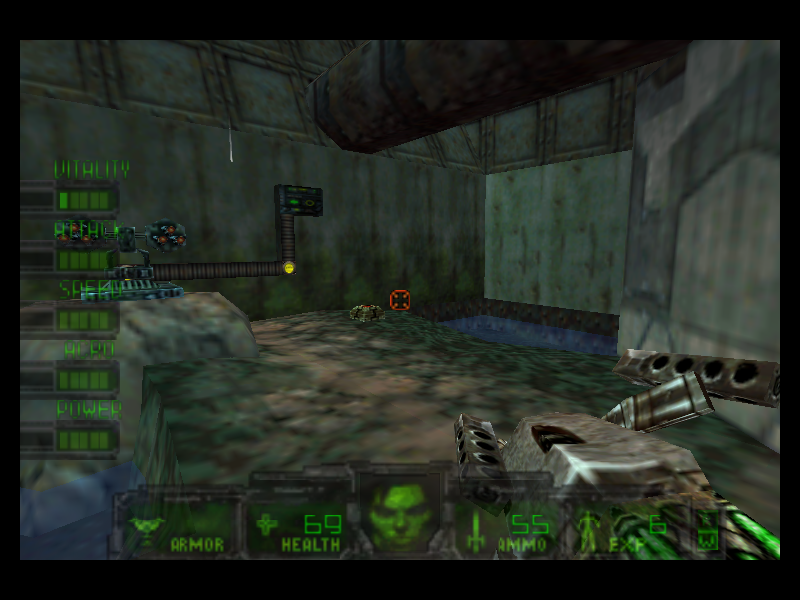
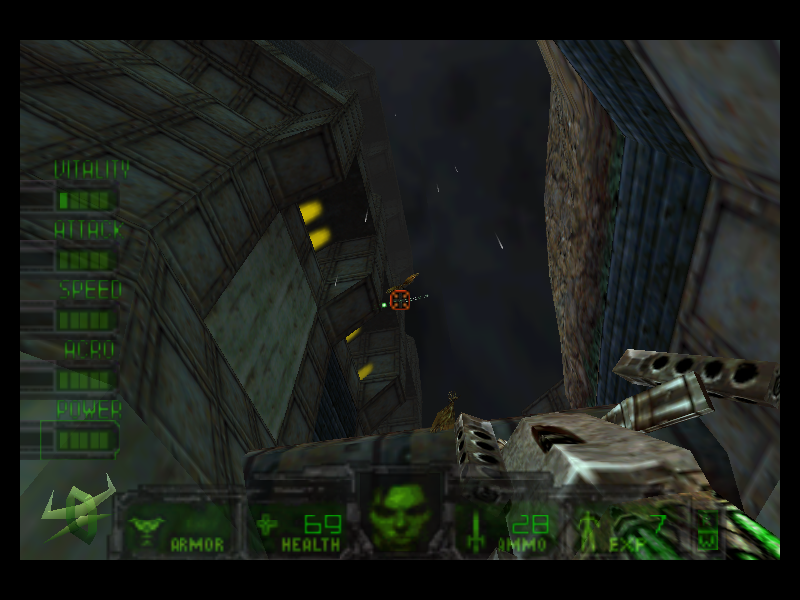
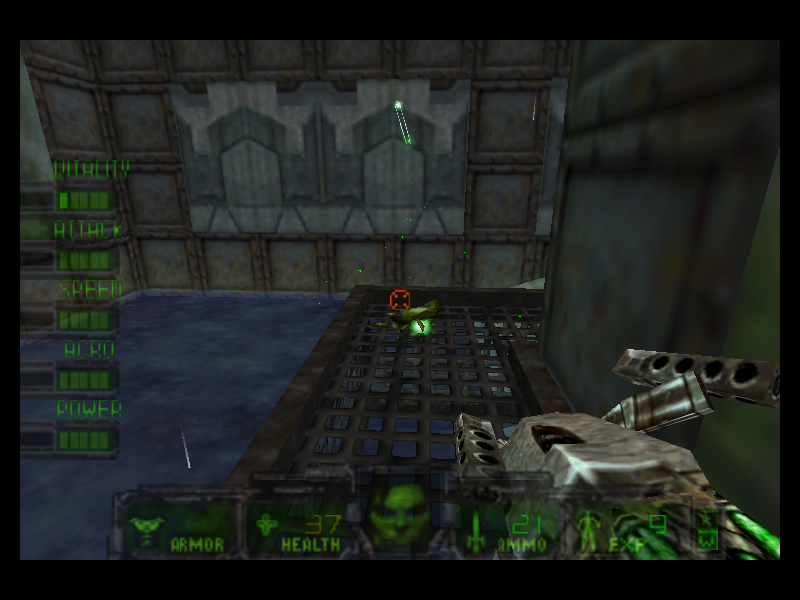
Nintendo 64/N64 Screenshots
 Doom 64
 Duke Nukem: Zero Hour
 Quake 64
 Resident Evil 2